A Retired Midwife Reveals The Ancient Core Restoration Method Village Women Quietly Used To Reclaim Their Bodies After Childbirth
How I Finally Understood Why My Stomach Still Looked Pregnant 14 Months After Delivery, and What I Did About It

He has not reached for me the way he used to.
Not since the baby.
I keep telling myself it is tiredness. His job. The children. That we are both just adjusting.
But I know what changed.
I see it every morning when I pass the mirror sideways and look away. I feel it every time I reach for an outfit I used to wear without thinking and put it back on the hanger. I feel it when we are in the same room and he does not look up the way he once did.
And the stomach that refuses to go flat, no matter what I eat, no matter how many crunches I do, no matter how long I wait.
Six months after my second baby, my four-year-old walked into the bedroom while I was getting dressed.
She pointed at my stomach and asked, "Mummy, is there another baby in there?"
I laughed. I told her no. I waited until she left the room.
Then I sat on the edge of the bed and cried in the kind of silence you only cry in when you do not want anyone to hear you.
That was eight months ago.
I am still thinking about it when I get dressed every morning.
And there is a thought I have never said to anyone.
Does he still see me the way he used to see me? Or is he just staying?
My name is Adanna.

I am a mother of two from Lagos.
I spent fourteen months trying everything I was supposed to try, watching nothing change, until a 67-year-old retired midwife explained in plain language what had actually happened to my body, and exactly what to do about it.
Fourteen Months of Trying Everything
After my second delivery, I gave myself three months.
Three months for the weight to settle, for my body to find its way back to something I recognised.
Three months passed. The stomach stayed.
So I tried harder.
I cut out rice. I cut out bread. I walked forty minutes every evening with the baby in the carrier, sweating in the Lagos heat, telling myself this was the week it would shift.
It did not shift.
I started waking up before the children to do crunches. Fifty every morning for six weeks.
The stomach stayed. And some mornings, sideways in the mirror, it looked worse.
I bought a waist trainer from an IG vendor. Wore it every day for three months, through the heat, through the discomfort, through the marks it left on my skin. When I finally took it off for good, everything underneath was exactly as it had been before I started. ₦14,000 gone.
I tried a flat tummy tea that a friend swore had worked for her cousin. Ten days. Bloating, running to the bathroom twice a night, and a stomach that had not moved a centimetre. I had to cancel a dinner out on day four because I was too uncomfortable to leave the house. ₦7,500 gone. My dignity gone with it.
I paid for six weeks of postpartum fitness classes at a gym near my office. The trainer was kind. The exercises were intense. My body was working hard. My stomach did not flatten. ₦28,000 gone.
Over forty thousand naira. Over a year. Nothing.
And underneath all of it, three questions I could not silence:
Is this just what my body is now?
Is he noticing?
Is this why something between us feels different?
The Night I Stopped Pretending It Was Just About My Stomach
It was a Friday evening. My husband came home. We had dinner. We put the children to bed. And then he sat on the sofa, picked up his phone, and watched something on YouTube for two hours.
He did not look at me once the way I wanted him to.
I lay in the dark beside him that night and I knew: something had changed. And I was the only one who could do something about it.
That night I made a decision. I was going to find out what was actually happening inside my body, because everything I had tried was treating the wrong thing.
I did not find the answer online.
I found it in the village.
The Trip That Changed How I Understood My Own Body
December 2024.
My husband's family gathered in the village for the omugwo of his youngest sister, who had just delivered her first child.
I did not want to go. But we went.
On the third evening, a group of us were in the back of the compound preparing soup, the men asleep, the new mother resting inside.
One of the younger wives said she did not understand why her stomach was not returning to how it looked before. She had been doing everything she was supposed to do.
That is when Mama Ezenwachi put down the crayfish she was grinding.
Meeting Mama Ezenwachi
Mama Ezenwachi is 67 years old.
A retired midwife who spent over thirty years delivering babies and supporting mothers at a mission hospital in Anambra State before she retired. She has seen more postpartum bodies than most gynaecologists. She has watched women recover beautifully and watched women struggle for years without understanding why.
She wiped her hands on her wrapper and looked at the younger wife who had spoken.
"What exercise are you doing?" she asked.
"Sit-ups. Crunches. I jog in the morning."
Mama Ezenwachi made a sound that was not quite a laugh and not quite a sigh. "Stop the crunches. You are pressing on something that is not ready to be pressed. You are making the problem worse, not better."
Everyone went quiet.
She talked about the deep core muscles. The linea alba. The separation that happens as the baby grows. The way the body can support recovery if you work with it correctly rather than fighting against it with exercises designed for a body that has not given birth.
"In our time," she said, "the midwives taught every new mother the same things. Breathing. Gentle progressive movement. Specific herbs to support the tissue from inside. A sequence that builds slowly over thirty days. These things work together. You cannot rush them and you cannot do them in the wrong order."
"But women today want one exercise that fixes everything in two weeks. That is not how your body works. Your body is patient. You must be patient with it."
That Evening Under The Stars
After the soup was made and the kitchen was cleared, some of us stayed back.
We sat near the edge of the compound where the night was quiet, and Mama Ezenwachi talked for nearly two hours.
She explained the full method. The breathing sequence that reconnects you to your deep core muscles. The progressive movement phases. The herbs, all of them locally available, that support connective tissue repair from the inside. What to eat and what to stop eating. The things that look like progress but are actually setbacks. The signs that your body is genuinely healing.
I sat there with my phone in my hand, notes app open, typing everything she said.
When she finished, she looked at me and said, "Take what I have told you home. Be consistent. Give it thirty days without interruption. And do not go back to the crunches."
I promised her I would not.
The First Two Weeks: Patience Required
I went back to Lagos and started the method on a Monday morning.
The first week, I felt nothing dramatic. The breathing exercises felt almost too simple. The movement sequences were gentle to the point where I kept wondering if I was doing enough.
By day four, I was convinced I had wasted my time listening to an old woman in the village.
I sat on my bathroom floor that evening and almost typed a message to my sister: "This is not working either. Same as everything else."
I did not send it. Something stopped me. Mama Ezenwachi's voice: "Your body is patient. You must be patient with it."
I put my phone down.
I continued.
Day five. Day six. Day seven. Still nothing I could point to. Just the same routine, morning and evening, that felt almost embarrassingly simple for something that was supposed to change my body.
By day eight I had made a decision: if nothing had changed by day ten, I was done.
Day nine changed my mind.
By day nine, something shifted. Not a dramatic overnight change. When I placed my hand flat on my stomach, there was a firmness under the surface that had not been there before. Not from sucking in. Just there, resting.
I stood sideways in the mirror on day twelve.
The dome was less pronounced.
I stood there for a moment and just looked.
Fourteen months of trying different things. Fourteen months of the same reflection. And now, after twelve days of doing the right thing in the right sequence, something had actually moved.
Day 21: The Moment I Knew
By the end of the third week, my husband noticed without me saying anything.
We were getting ready to go out and I was standing in our bedroom in just my underwear, looking through the wardrobe. He walked past, stopped, and looked at me with a specific expression.
"Adanna. Your stomach."
I turned around. "What about it?"
"It looks different. Good different."
He did not make a production of it. He just said it matter-of-factly the way he says things, then continued what he was doing.
But I stood there by the wardrobe for a moment longer than necessary.
Because a year of consistent effort had produced nothing. Three weeks of the right approach had produced the first visible change another person could see without being told to look for it.
What Mama Ezenwachi Knew What Nobody Else Told Me
During pregnancy, as the baby grows, the two columns of abdominal muscle that run down the centre of your stomach are stretched apart by the expanding uterus. The tissue that connects them, the linea alba, thins and widens. This is completely normal. It has to happen to make room for the baby.
The problem is that after birth, for many women, this separation does not fully close on its own.
Researchers estimate this condition, called diastasis recti, affects the majority of women at six weeks postpartum. For a significant portion, it remains present at one year and beyond.
When the separation is present, the abdominal wall cannot generate tension properly. This is why the stomach rounds outward even when your overall weight has returned to normal. The muscles are not holding the contents of your abdomen in place the way they are designed to.
And here is the part that matters most: the exercises most women do instinctively when they want to flatten their stomach, crunches, sit-ups, leg raises, these exercises increase intra-abdominal pressure in a way that pushes outward against an already separated wall. In the presence of diastasis recti, they can make the separation worse, not better.
Mama Ezenwachi knew this from thirty years of watching what worked for the mothers in her care — not from vocabulary, from results. Everything she taught me, I put it in a guide so I can share it with you.
Introducing: The After-Birth Body Restoration System
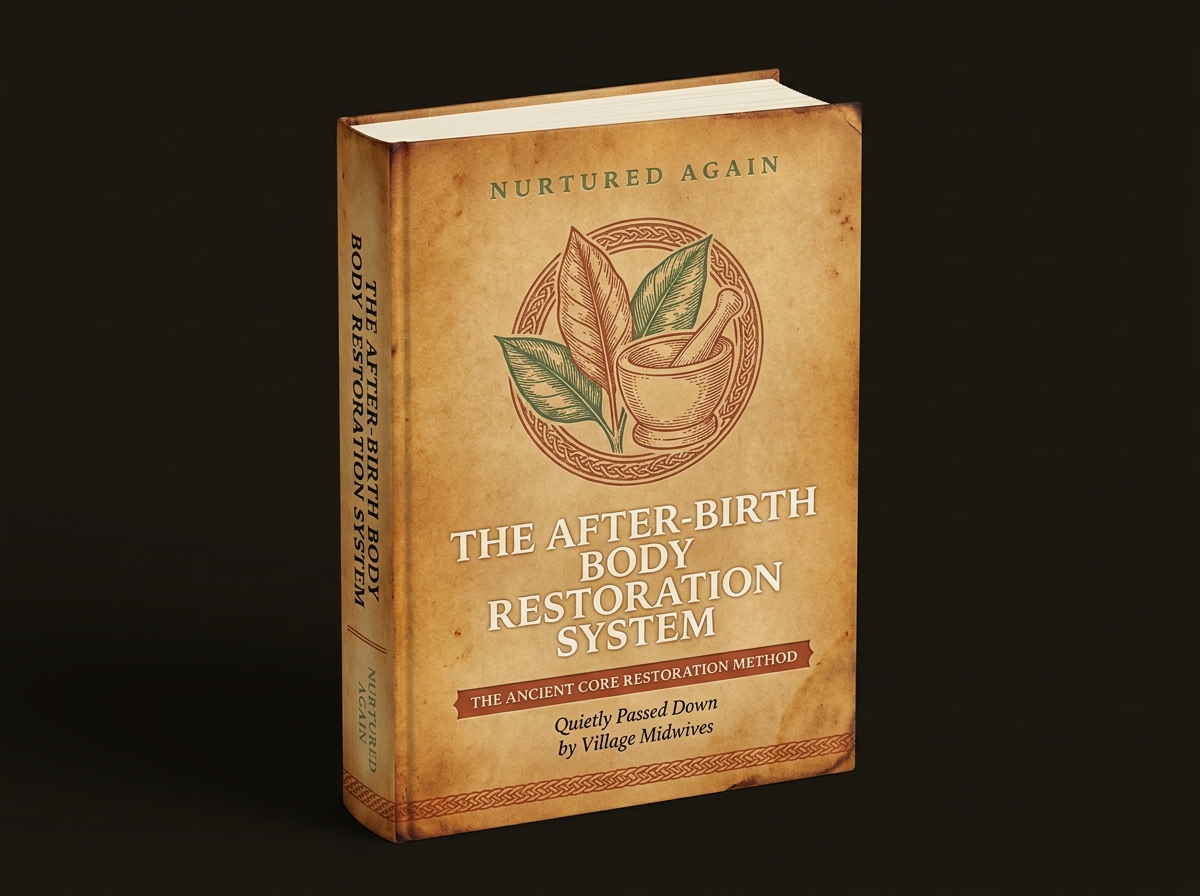
The Ancient Core Restoration Method Quietly Passed Down by Village Midwives — That Flattens the Post-Baby Belly From the Inside Out, Even When Crunches, Waist Trainers, and Flat Tummy Teas Have All Failed You
Inside this guide, you will find:
✓ Why your stomach still looks like this even though you have lost the baby weight — the plain explanation most doctors never give you, and why it changes everything about what you do next (Page 4)
✓ The one assessment you can do yourself at home in 60 seconds to know whether abdominal separation is present and how significant it is — before you spend another day doing the wrong thing (Page 7)
✓ The breathing sequence that is the foundation of everything — the step most women skip because it seems too simple, not knowing that skipping it is exactly why nothing they try after it works (Page 10)
✓ The full 30-day progressive movement protocol, phase by phase, with clear instructions for each stage and how to know when you are ready to move to the next (Page 14)
✓ The five locally available herbs Mama Ezenwachi used to support connective tissue recovery in her patients, where to find them, and exactly how to prepare them (Page 22)
✓ The exercise that feels like progress but is actively making your gap worse — most postpartum women do it every morning and cannot understand why their stomach never changes (Page 26)
✓ The nutrition guidance that supports tissue repair from inside, including the foods that actively slow recovery and should be reduced during the 30-day protocol (Page 30)
✓ Mama Ezenwachi's adapted protocol for women who delivered by Caesarean section, which addresses the additional consideration of the surgical scar and surrounding tissue (Page 34)
No gym. No equipment. No physiotherapist appointment.
Total cost of all the herbs referenced in this guide, purchased from any major Nigerian market? Under 4,000 Naira.
Compare that to what most women spend before they find what actually works:
This is the same framework the right physiotherapist would give you — structured as a practical 30-day protocol, at a fraction of the cost.
This introductory price is available only while the launch offer lasts.
After this offer closes, the price returns to ₦15,000.
Once you complete your payment, here is exactly what happens:
- You are taken to a simple, secure payment page
- Your payment of ₦9,800 is processed instantly
- Your guide is delivered to you via WhatsApp and email within minutes of confirmation
What Women Are Saying After Following The Protocol
Swipe to read their conversations →
WAIT. Before You Decide, You Are Also Getting Two Free Bonuses Today
If you get the guide during this launch period, I am adding two additional resources completely free:
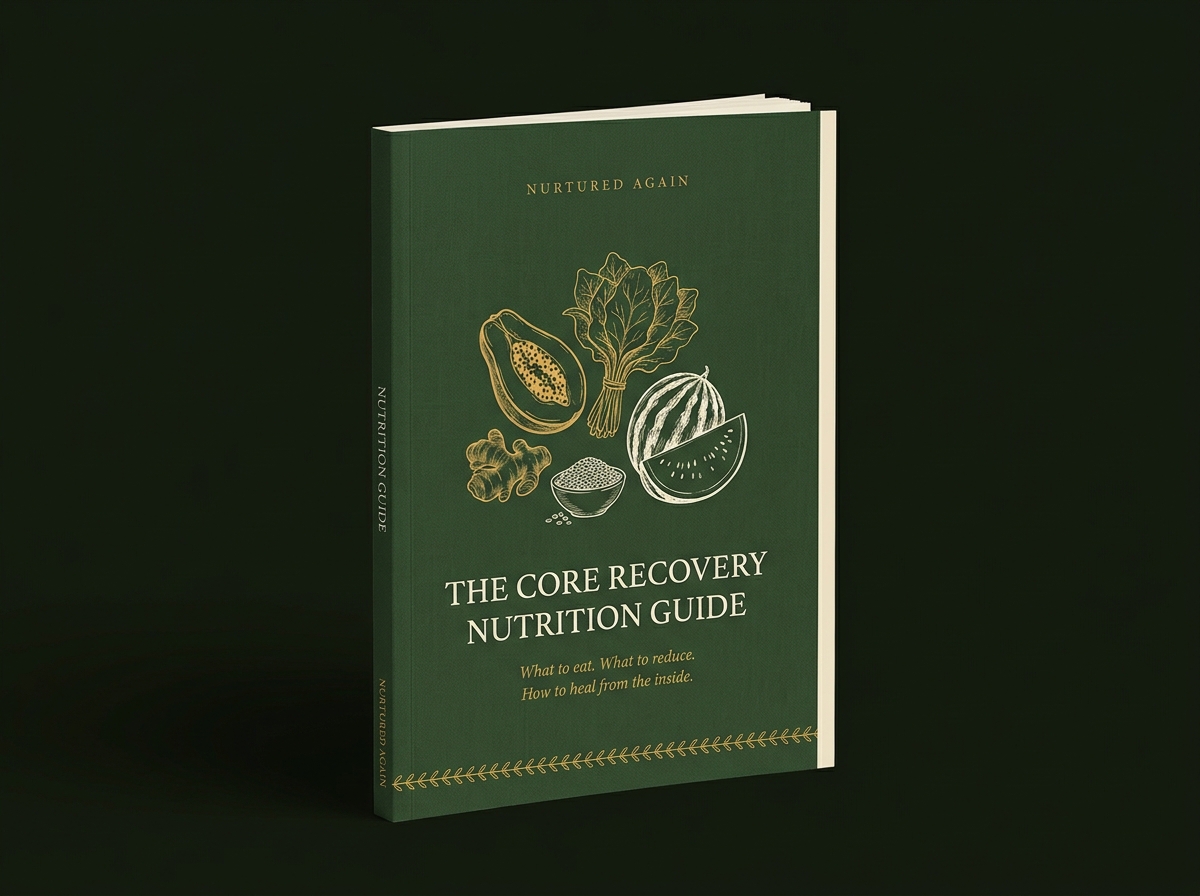
BONUS 1: The Core Recovery Nutrition Guide
(Value: ₦5,000)

BONUS 2: The 30-Day Restoration Calendar
(Value: ₦5,000)
BONUS 1: The Core Recovery Nutrition Guide (Value: ₦5,000)
A practical food guide that shows you exactly what to eat and what to reduce during your 30-day restoration protocol to support connective tissue repair from the inside.
- The 10 foods that actively support collagen production and tissue healing
- The 6 foods that slow recovery and should be reduced during the protocol
- A simple, Nigerian-friendly 14-day meal plan that you can follow without overthinking
- Smoothie and drink recipes using local ingredients that support gut health and reduce inflammation
Worth ₦5,000. Yours free today.
BONUS 2: The 30-Day Restoration Calendar (Value: ₦5,000)
A day-by-day calendar so you never have to guess what comes next.
- Each day's exercises, breathing practice, and herb preparation written out clearly
- Checkboxes to track your progress and stay consistent
- Milestone markers so you know what visible changes to expect and when
Worth ₦5,000. Yours free today.
Everything You Receive Today

Others are reading this page right now. The introductory price will not stay open indefinitely.
The Nurtured Again 30-Day Guarantee
Try it for 30 days. Follow the protocol exactly as the guide describes.
If your body has not visibly changed. If your core does not feel stronger. If nothing has shifted.
Send me one WhatsApp message. I will refund your full ₦9,800 the same day. No forms. No questions. No drama. Just a message from you and your money back from me.
I am offering this because I have seen what this protocol does. I have lived it. And I would not ask you to spend a kobo on something I was not certain would work for you.
You carry all the risk if you do nothing. You carry none of the risk if you try this.
Right Now You Have A Choice
Continue lying awake next to him at night, staring at the ceiling, wondering if he is just staying.
Continue reaching for the same clothes you wore before the baby and putting them back on the hanger.
Continue doing the crunches that are making things worse, not better, and not understanding why nothing changes.
Continue spending money on things that touch the outside while the real problem sits untouched inside.
Continue waiting for your body to find its way back on its own.
It will not. Not without the right information. Not without this.
Imagine 30 days from today.
You stand sideways in the mirror and the dome is visibly smaller.
Your clothes fit differently. Your posture is upright. Your core feels like it belongs to you again.
You understand what happened to your body. You are working with it, not fighting it.
Your body is not broken. It just needed the right information, in the right sequence, at the right time.
That is what this guide gives you.
Questions Women Ask Before Getting The Guide
One Last Thing
I want you to imagine something with me for a moment.
It is 30 days from today. You are getting dressed in the morning. You reach for a top you have not worn since before your last pregnancy because you have not felt comfortable in it.
You put it on.
It fits.
Not because you starved yourself. Not because you punished yourself with the wrong exercises for months on end. But because someone finally explained what had actually happened to your body, and gave you the specific, correct approach to support its recovery.
You stand in front of the mirror and your stomach is flatter than it has been in over a year. Your posture is upright. Your core feels engaged and strong.
And you understand now, fully, that your body was never broken.
It was waiting for the right information.
That information is in this guide. And it is waiting for you.
Your body carried life. Now let it come back to itself.
With care,
Adanna
Nurtured Again
P.S. The 30-day money-back guarantee means the only risk here is doing nothing. Either this works and your body visibly responds, or you receive your full ₦9,800 back with no conditions attached.
P.P.S. The introductory price of ₦9,800 will not stay open. After this launch period the price returns to ₦15,000. If you are reading this page it is still available. Do not let it pass.
P.P.P.S. Every week you continue doing the wrong exercises is a week of potential recovery you do not get back. The body responds to the correct approach at any stage. But the earlier you start the right thing, the sooner your body can respond. Start today.
Nurtured Again · For The Mother Who Wants Herself Back
Disclaimer: The information on this page is provided for educational and informational purposes only. It is not intended as medical advice and does not replace the assessment or guidance of a qualified healthcare provider. Results vary between individuals. Diastasis recti severity and recovery timelines differ based on factors including the degree of separation, delivery method, overall health, and consistency with the protocol. If you have a diagnosed medical condition or concerns about your postpartum recovery, please consult your doctor or a pelvic floor physiotherapist before beginning any new programme.